AI Agents & Automation Tools for Enterprises
Cut out headaches, boost accuracy, and help teams move faster.
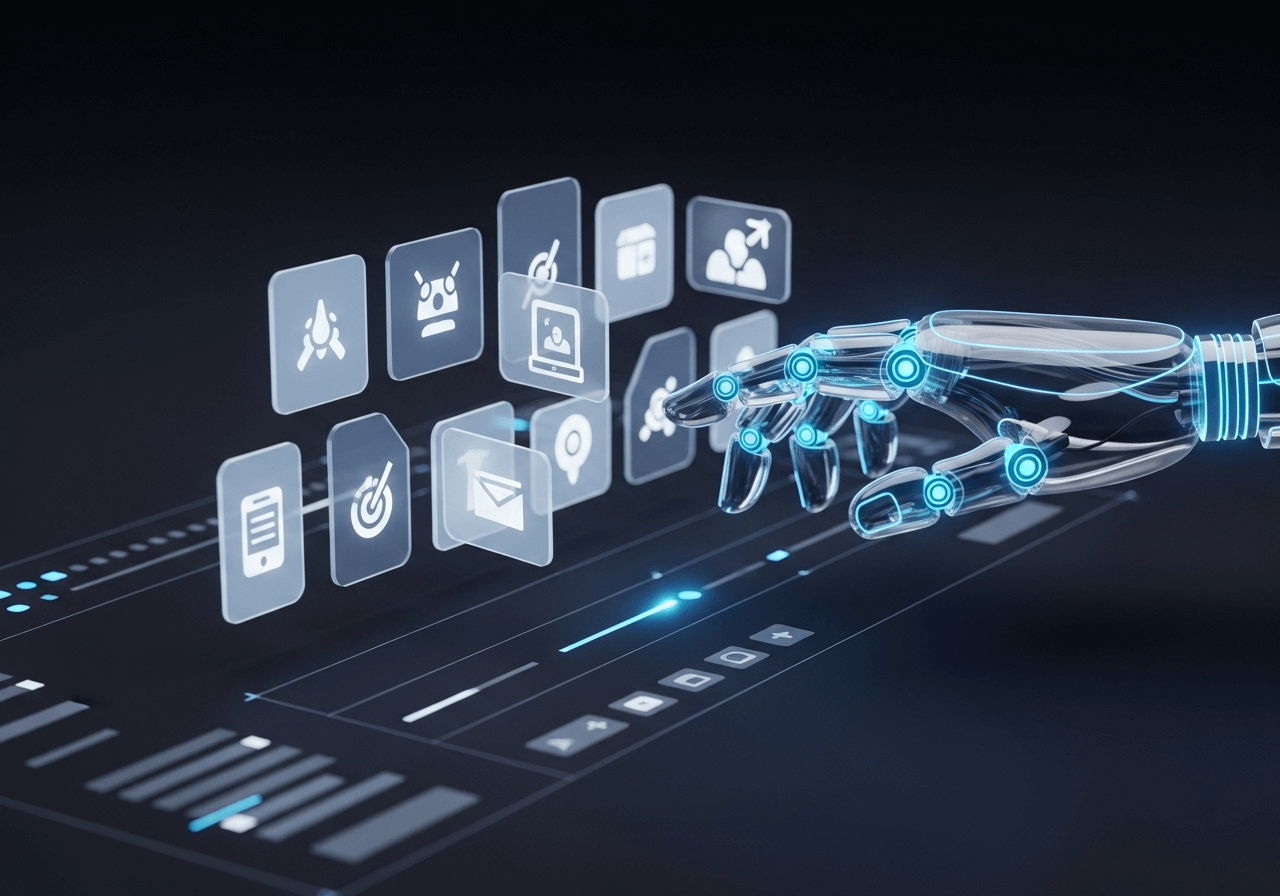
Atmez builds secure, enterprise-ready AI agents that handle tasks across your software, keep complicated workflows running smoothly, and give teams up-to-the-minute insights.
What Are AI Agents?
AI agents are software systems that figure out goals, break into steps, and act.
What They Do
- Figure out goals or instructions
- Break big tasks into smaller steps
- Tap into tools and APIs
- Find and analyze data
- Make choices based on set rules
- Loop in people if they need to
“Unlike chatbots, AI agents actually do things—like update records, kick off workflows, generate reports, or help different teams work together.”
How AI Agents Drive Intelligent Automation
Reasoning
They figure out what to do next
Context awareness
They tap into business data
Adaptability
They deal with those weird one-off situations
Multi-step execution
They pull together complex workflows
Continuous learning
They get better as they go
AI Agents vs Traditional Automation
AI agents do not replace automation platforms—they extend them by adding intelligence and adaptability.
| Feature | Traditional RPA | AI Agents |
|---|---|---|
| Handles ambiguity | ❌ | ✅ |
| Multi-step reasoning | ❌ | ✅ |
| Adapts to new data | Limited | Strong |
| Uses APIs dynamically | Rare | Native |
| Human oversight controls | Limited | Designed-in |
Our AI Agent Development & Automation Services
🤖 Custom Autonomous Agents
Agents designed for specific teams—operations, finance, HR, engineering, or customer service.
- Fits your business rules
- Aligned with risk level
- Tailored to your needs
⚙️ Workflow Orchestration Engines
Agents that work together across your internal services.
- ERP integration
- CRM syncing
- Ticketing automation
- Analytics processing
🔌 Tool-Calling & API Automation
Agents that trigger workflows, run scripts, and keep systems in sync.
- Trigger workflows
- Run scripts
- Query databases
- Update records & generate documents
📚 Enterprise Knowledge Agents
Internal copilots learning from your documents and policies.
- Learn from SOPs
- Access past cases
- Secure internal system
- Policy awareness
🛡️ Human-in-the-Loop Systems
You stay in control with approval checkpoints and overrides.
- Approval checkpoints
- Confidence thresholds
- Audit trails
- Override mechanisms
Use Cases We Deliver
Operations & Process Automation
- Purchase order handling
- Vendor onboarding
- Ticket routing
- Incident triage
- SLA monitoring
Customer Support Agents
- Case classification
- Suggested resolutions
- Knowledge retrieval
- Refund processing
- Escalation routing
Finance & Reporting Automation
- Invoice reconciliation
- Expense auditing
- Forecast generation
- Compliance checks
- Month-end reporting
Sales & RevOps Enablement
- CRM updates
- Lead qualification
- Proposal drafting
- Account research
- Pipeline analysis
Engineering Productivity
- Release note drafting
- Log analysis
- Root-cause detection
- QA automation
- Infrastructure monitoring
Our Delivery Approach
1️⃣ Process Discovery
Workflow mapping, automation scoring, and risk analysis.
2️⃣ Architecture Design
Agent frameworks, data access layers, and security boundaries.
3️⃣ Prototype & Validation
Pilot agents, human review loops, and KPI tracking.
4️⃣ Enterprise Deployment
Integration, observability, and monitoring.
5️⃣ Continuous Optimization
Performance tuning, prompt refinement, and policy updates.
Security, Compliance & Governance
All systems are designed with enterprise controls like role-based access, logging & audit trails, data isolation, private deployments, model governance, regulatory alignment, and explainability.
Frequently Asked Questions
Chatbots answer questions. AI agents take actions—calling tools, updating systems, and executing workflows.
Yes, when built with governance, approval loops, access controls, and auditing—features we design into every deployment.
Most projects involve connecting CRMs, ERPs, data warehouses, ticketing systems, and internal APIs.
No. They reduce manual workload and allow teams to focus on higher-value tasks.
Pilot agents are typically built in weeks, followed by phased enterprise rollouts.
Other AI & Machine Learning Services
🚀 Start Your AI Automation Journey
Our team can help you evaluate opportunities and design a practical roadmap for intelligent automation.